 By
By 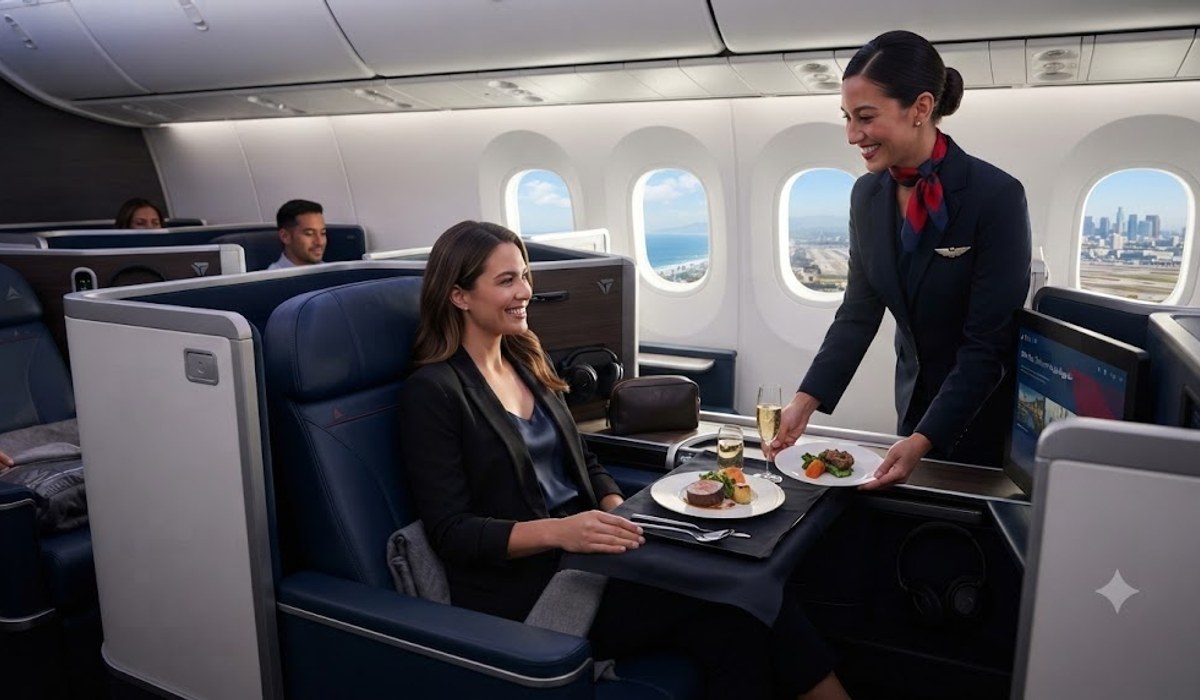
Delta Redefines Long-Haul Luxury for 2026
Delta Air Lines is initiating a systemic overhaul of its Delta One business-class offering to better compete in the high-yield premium travel market. Rather than incremental updates, the airline is implementing a full-scale service evolution designed to meet the rising expectations of international luxury travelers.
The transformation focuses on four primary pillars of the passenger experience:
- Culinary Innovation: A complete refresh of dining concepts and meal delivery.
- Hardware & Aesthetics: New service equipment and elevated presentation standards.
- Service Protocol: Revised cabin crew procedures to ensure a more personalized journey.
- Personnel Readiness: Specialized, large-scale training for thousands of flight attendants.
Strategic Rollout Beginning at LAX
Los Angeles International Airport (LAX) has been selected as the primary launchpad for this premium pivot. The upgraded Delta One service will first appear on transoceanic routes departing from LAX in autumn 2026.
LAX serves as a critical gateway for Delta’s connectivity to Asia and Oceania, making it the ideal testing ground for these high-standard service protocols. Following the initial LAX debut, Delta plans to scale the upgraded experience across its entire global long-haul network throughout 2027.
This phased implementation allows the airline to maintain quality control and ensure crew consistency before the service becomes the global standard for the brand.
Investing in Human Capital and Hospitality
Recognizing that hardware alone does not define luxury, Delta is investing heavily in its workforce. Thousands of flight attendants will undergo dedicated training focused specifically on the new Delta One standards.
This training is designed to eliminate service variability, focusing on:
- Advanced hospitality techniques.
- New presentation standards for onboard dining.
- Refined passenger interaction protocols.
By prioritizing crew preparation, Delta aims to shift the Delta One experience from a standard business-class product to a sophisticated, restaurant-style hospitality service at 35,000 feet.
The Shift Toward High-Value Travel Strategy
The 2026 overhaul is a direct response to the shifting economics of aviation, where premium cabins now drive a disproportionate share of airline revenue. Modern luxury travelers increasingly prioritize the "end-to-end" journey over simple seat comfort.
By integrating these inflight upgrades with existing investments in premium lounges and airport facilities, Delta is positioning itself to capture a larger share of the corporate and luxury leisure markets. The focus is on creating a seamless transition from the ground experience to the onboard environment.
Implementation Timeline
| Phase | Timeline | Focus Area | Scope |
|---|---|---|---|
| Initial Launch | Autumn 2026 | Transoceanic Flights | Departing from LAX |
| Global Expansion | Throughout 2027 | All Long-Haul Services | Full International Network |
| Crew Readiness | Pre-Autumn 2026 | Specialized Training | Thousands of Flight Attendants |
Key Takeaways
- LAX First: The luxury refresh debuts at Los Angeles International Airport in autumn 2026.
- Comprehensive Overhaul: Changes include new dining concepts, upgraded equipment, and revised crew procedures.
- Network Scale: The service will expand to all global long-haul routes by 2027.
- Personnel Focus: Thousands of crew members are receiving specialized training to ensure service consistency.
- Strategic Goal: Delta aims to increase competitiveness in the high-revenue premium travel sector.
FAQ
When will the new Delta One service be available? The service launches in autumn 2026 on transoceanic flights from LAX, with a global rollout continuing through 2027.
What specific changes can passengers expect? Passengers will see a new dining experience, improved meal presentation, updated service equipment, and a higher standard of hospitality from trained crew members.
Which airport is the first to receive the upgrade? Los Angeles International Airport (LAX) will be the first launch point for the next-generation service.


